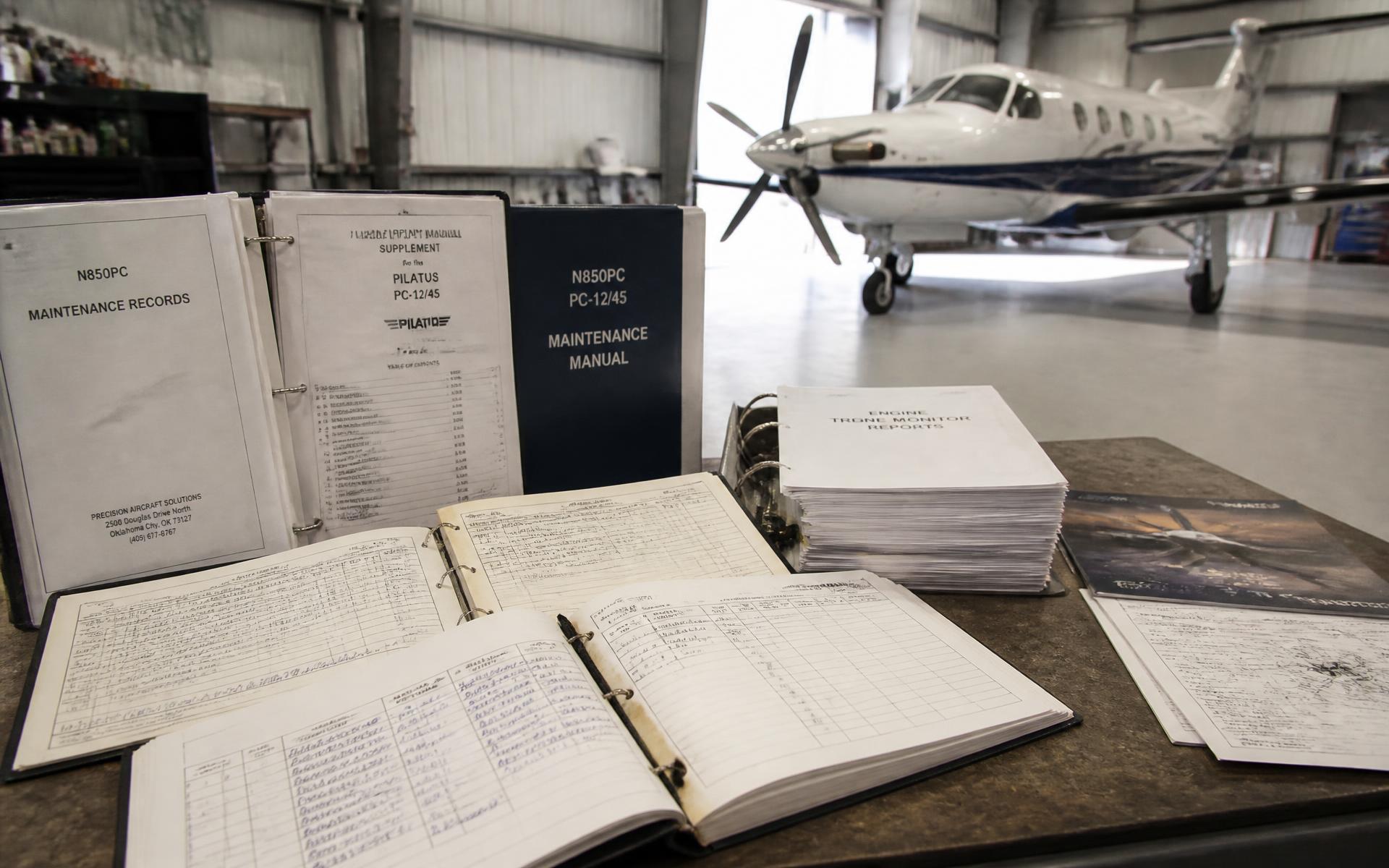
Airframe records review
What does the airframe history actually support?
An aircraft can look clean today while its records still contain unanswered questions about previous repairs, modifications, damage history or missing periods.
We review the available airframe records to show what the documented history supports, what remains unclear and what should be clarified before you rely on it.
When does an airframe records review become useful?
Use it when the airframe history itself matters more than the general aircraft records — for example because of previous repairs, modifications, suspected damage, incomplete logbooks or an upcoming purchase, sale or transfer.
- Step 1
Airframe records received
Available airframe logbooks, maintenance records, modification documents, repair records and supporting evidence are collected.
- Step 2
History followed
The documented airframe history is followed chronologically through owners, operators, maintenance events and available logbooks.
- Step 3
Repairs and modifications reviewed
Available repair, modification, STC and other approval evidence is compared with the entries recorded in the aircraft history.
- Step 4
Airframe-specific status checked
Relevant AD/SB evidence, structural or calendar-controlled items where applicable, weighing information and other airframe-specific records are reviewed.
- Step 5
Gaps and inconsistencies identified
Missing evidence, unclear historical periods, unsupported entries or conflicting information are separated from what the records support.
- Step 6
Next aircraft decision
The findings can support a purchase, sale, transfer, further inspection or request for additional evidence.
This is a records-based review. It does not determine the physical structural condition of the aircraft and does not replace a physical inspection.
The aircraft can look good while the history remains unclear.
The purpose of the review is not to judge the appearance of the aircraft. It is to understand what the documented airframe history actually shows.
Incomplete history
Logbook periods or historical records may be missing, making parts of the aircraft history difficult to follow.
Repair evidence is incomplete
A repair may be recorded while the supporting work pack, approved data, repair reference or release evidence is unavailable in the records reviewed.
Modification traceability is unclear
STCs, modifications or equipment changes may appear in the aircraft history without complete supporting documentation.
Damage history needs clarification
Previous damage, repair or incident-related information may require additional evidence before the documented history can be understood confidently.
Typical airframe situations
Buying an aircraft
The buyer wants to understand the documented airframe history before committing further money.
Known previous damage or repair
A repair or damage event exists and the available supporting records need to be understood.
Aircraft with several previous owners
The history passes through multiple operators, jurisdictions or record systems.
Modification-heavy aircraft
The aircraft has multiple STCs, modifications or equipment changes that need clearer traceability.
Import or transfer
The receiving organisation needs a clearer picture of the airframe history and supporting evidence.
Preparing for sale
The owner wants to identify airframe-records questions before they are raised by a buyer.
What airframe records can be reviewed?
The exact scope depends on the aircraft and the records available.
What do you receive from the airframe records review?
You receive a written review showing what the available airframe history supports, what remains unclear and which records should still be sourced or clarified.
- documented airframe-history summary
- logbook-continuity observations
- repair-history observations
- modification / STC observations
- airframe AD / SB observations
- structural or controlled-item observations where applicable
- missing supporting evidence
- conflicting or unclear information
- questions for seller, owner, CAMO, CAO or MRO
- recommended next actions
- written airframe records report
What happens after the review?
History is sufficiently clear
The available records support the key airframe history well enough for the next stage.
More evidence is requested
The seller, previous owner, CAMO/CAO or MRO is asked to provide supporting repair, modification or historical records.
Further inspection is recommended
A records finding identifies an area that should be addressed during the physical pre-buy or another technical inspection, carried out by others.
The decision changes
Unresolved history or documentation exposure changes the purchase, sale, transfer or negotiation decision.
Why are you reviewing the airframe?
This is an independent records review. Findings are based only on the records provided. It does not inspect the physical airframe. It does not determine structural condition. It does not replace a physical pre-buy inspection. It does not perform NDT. It does not issue a maintenance release. It does not issue an ARC. It does not approve repairs or modifications. It does not guarantee airworthiness. No conclusions are made beyond what the documentation supports.
Full legal wording is available in the Terms / Scope of Review.