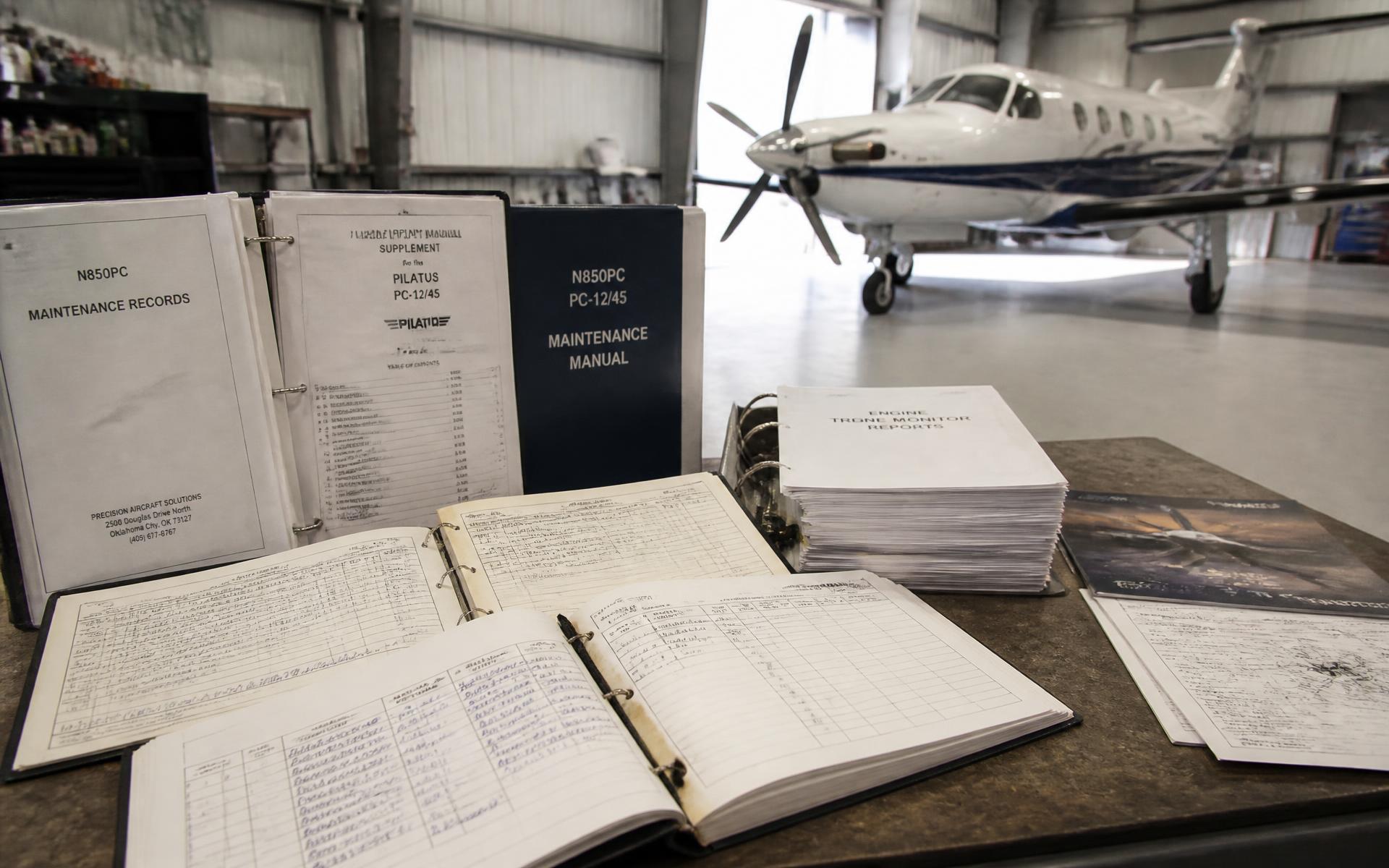
Aircraft maintenance status review
Know what appears due, what is coming and what the records actually support.
Maintenance status can look simple on a summary sheet, but the supporting records may tell a more complicated story. We compare the available maintenance programme, status information and supporting evidence to identify what appears current, what is approaching, what is unclear and what still needs clarification.
Where does the maintenance status review fit?
Use it when you need a clearer picture of the aircraft’s documented maintenance position before planning downtime, budgeting, purchase, sale or transfer.
- Step 1
Maintenance information received
The available maintenance programme, current status documents and supporting records are collected.
- Step 2
Programme and evidence compared
Relevant programme items are compared with logbook entries, release documents, work packs and component records.
- Step 3
Due, upcoming and unclear items identified
Items that appear due, approaching, unsupported or unclear are separated from those that are supported by the available evidence.
- Step 4
Timing and cost exposure summarised
Near-term maintenance items are grouped so potential downtime, planning and budget impact can be understood.
- Step 5
Action list prepared
You receive a practical list of what may need scheduling, clarification or additional supporting evidence.
The review reports observations from the records provided. It is not a maintenance release, CRS or statement of airworthiness.
A maintenance-status summary is only as useful as the evidence behind it.
The purpose of the review is to compare the stated maintenance position with the supporting records and identify where the picture is clear and where it still needs clarification.
Completed item without supporting evidence
A maintenance task may be shown as completed in a status summary while the supporting entry, release or work record is not available in the records reviewed.
Item appears past its limit
Based on the available hours, cycles, dates or records, a task may appear to be beyond its stated interval and require clarification.
Defect or deferred item needs clarification
An open or deferred item may require further evidence to confirm its current status, closure or continuing validity.
Status does not reconcile
The maintenance-status summary may not fully agree with the supporting logbooks, component records or maintenance evidence.
What can be reviewed?
The exact scope depends on the aircraft, the programme and the records available.
What do you receive?
You receive a written maintenance-status review separating what the available records support from what appears due, approaching, unclear or still requires evidence.
- maintenance-status observations
- items appearing due or past their stated interval
- items approaching the next maintenance window
- unclear or unsupported items
- defects or deferred items requiring clarification
- supporting evidence not provided
- inconsistencies between status documents and records
- questions for CAMO, CAO, MRO or current record holder
- practical planning and action list
What happens after the review?
Documented position is sufficiently clear
The available records support the stated maintenance position well enough for planning to continue.
Maintenance is planned
Items appearing due or approaching are incorporated into the next maintenance or downtime plan.
Further evidence is requested
The current CAMO, CAO, MRO or record holder is asked to provide documentation behind unclear items.
Budget or timing changes
Near-term maintenance exposure changes the expected downtime, budget or aircraft-value discussion.
Unsure what is actually due on the aircraft?
Send us the basic aircraft details together with the maintenance programme, current status information and whatever supporting records are available. We will suggest the appropriate review scope before any work begins.
You do not need to have all the documents yet.
This is an independent records-based review based only on the records provided. Findings are limited to the records made available for review. It does not establish formal maintenance release status. It does not issue a CRS. It does not issue an ARC. It does not replace CAMO/CAO responsibility. It does not replace a physical inspection. It does not guarantee airworthiness. Items that appear due or past their stated interval may require confirmation from the responsible organisation.
Full legal wording is available in the Terms / Scope of Review.